
The Beginner’s roadmap to the law
When you enter the world of British shooting, you aren’t just joining a sport; you are entering a highly regulated legal framework. The Firearms Act 1968 (and its 2026 updates) is the “rulebook” that dictates what you can own, where you can shoot, and how much paperwork you need to fill out.
To the uninitiated, hearing terms like “Section 1” or “Section 58” sounds like a foreign language. However, these numbers are simply categories based on how dangerous the government perceives a weapon to be. This guide provides UK Firearms Act sections explained for the absolute beginner, covering everything from common shotguns to prohibited handguns and antique curios.
The four tiers of ownership
In 2026, the law essentially funnels all weapons into four main “buckets.” The higher the number doesn’t always mean “more powerful,” but it usually means “more restricted.”
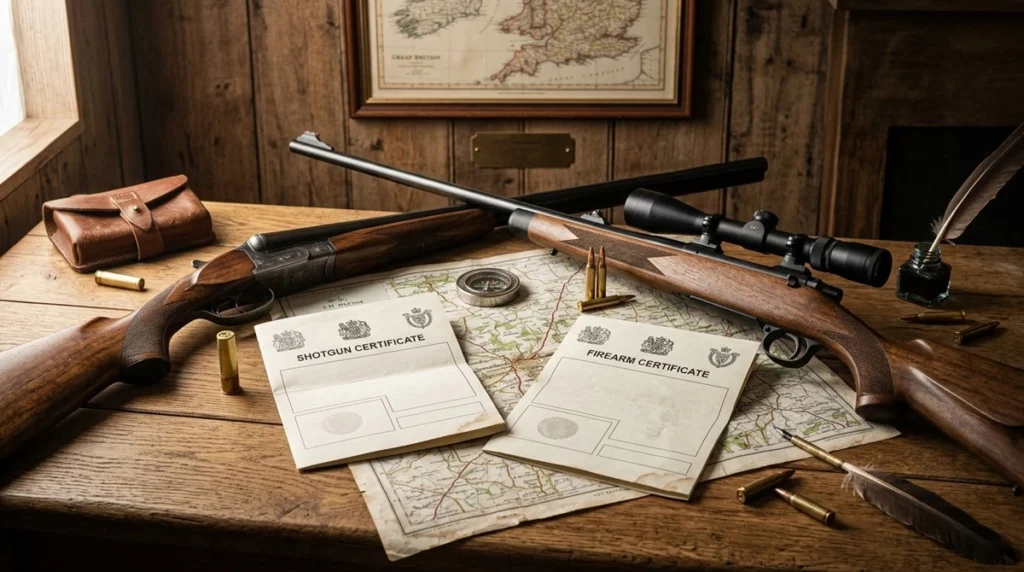
1. Section 2: The shotgun certificate (SGC)
This is the starting point for most UK shooters.
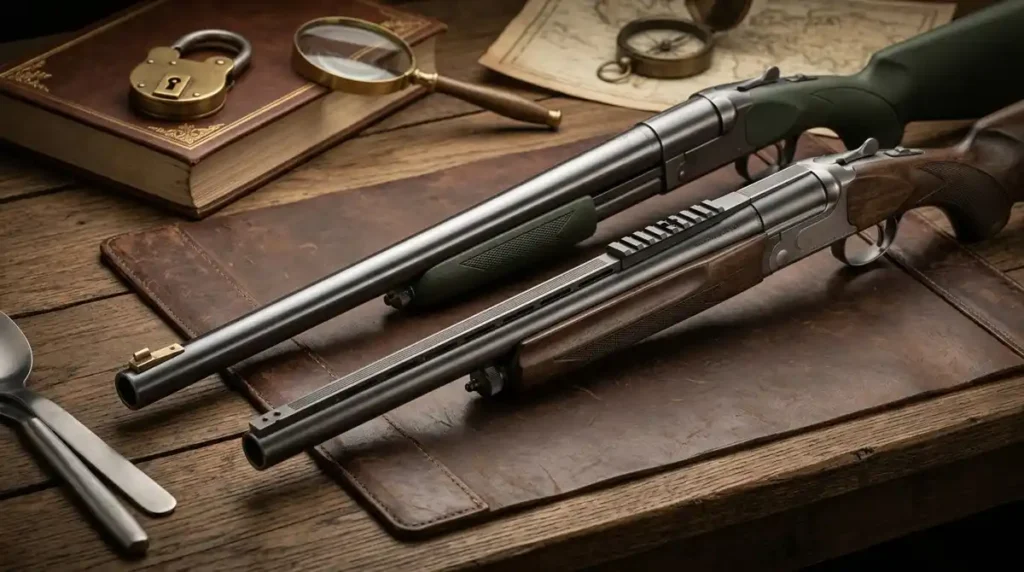
- What it is: Traditional shotguns with a smooth-bore barrel (at least 24 inches long) and a fixed magazine holding no more than 2 cartridges (often called a “2+1”).
- The Beginner rule: You don’t need a specific “reason” for every shotgun you buy. Once you have the SGC, you can fill your cabinet (within reason).
- 2026 update: Be aware that the Home Office is currently consulting on merging this with Section 1, which would make the rules much stricter.
2. Section 1: The Firearm Certificate (FAC)
This category is for weapons that require “individual justification.”
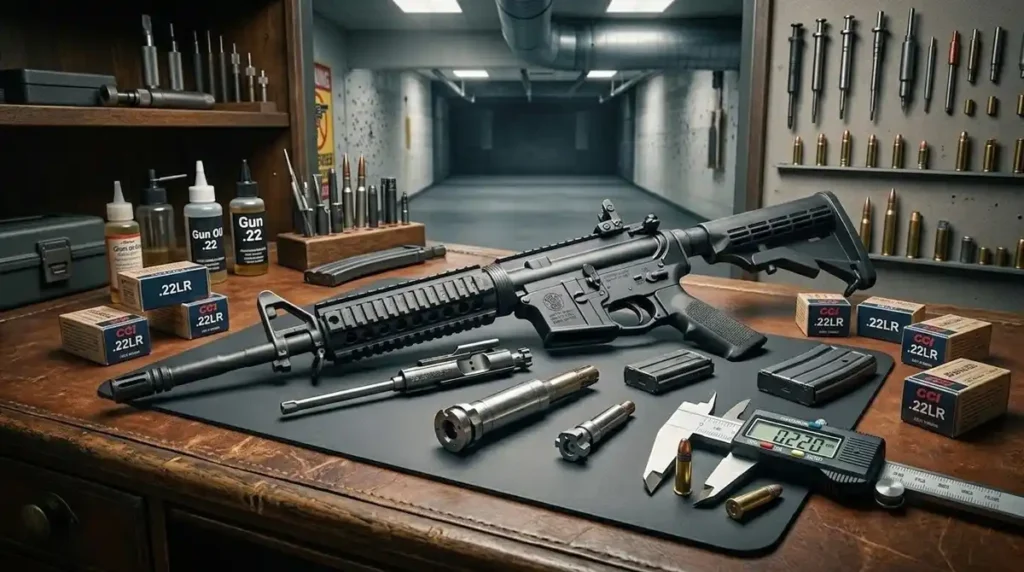
- What it is: Bolt-action rifles, .22LR semi-autos, and high-capacity shotguns (magazines holding more than 2 shells).
- The beginner rule: You must prove a “Good Reason” for each specific gun (e.g., “I need a .243 rifle for deer stalking on X estate”).
3. Section 5: The prohibited list
These are weapons deemed “specially dangerous” and are banned for 99% of civilians.
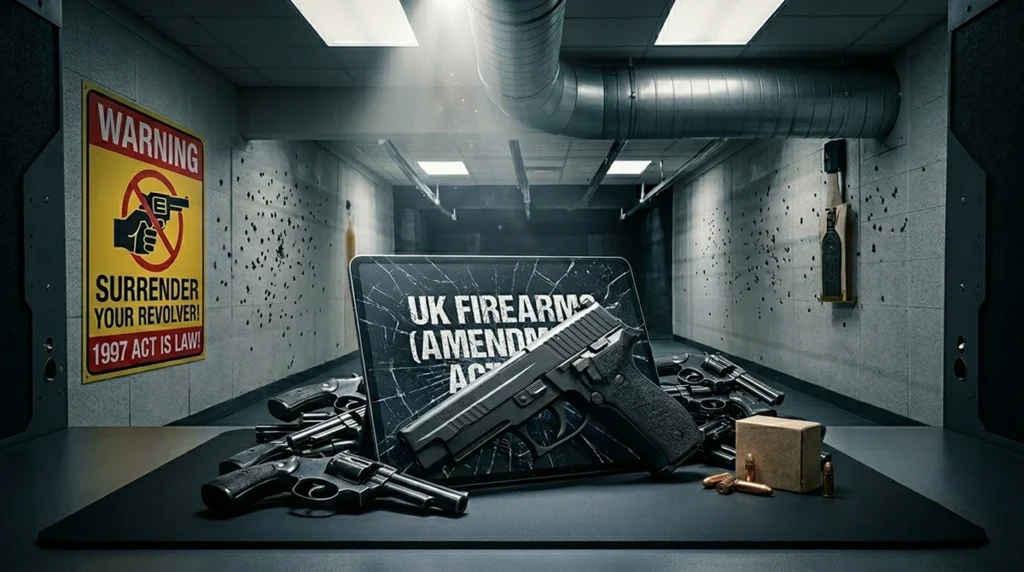
- What it is: Handguns (pistols/revolvers), fully automatic machine guns, and self-loading centerfire rifles (like an AR-15 in 5.56mm).
- The beginner rule: Unless you are a high-security professional or a museum, you cannot own these. Possession carries a mandatory 5-year prison sentence.
4. Section 58(2): The antique exemption
A fascinating “loophole” for collectors of history.
- What it is: Old firearms (pre-1939) kept as “curios or ornaments” that use obsolete calibers that are no longer commercially available.
- The beginner rule: These are “off-ticket,” meaning they don’t require a license to hang on your wall. Crucially: If you buy ammunition for them or intend to fire them, they immediately become Section 1 and must be put on a license.
Comparison table: Which license do you need?
| The Gun | The Law | The Document | The Difficulty |
|---|---|---|---|
| Over/Under Clay Gun | Section 2 | Shotgun Certificate | ★☆☆☆☆ (Easier) |
| Deer Stalking Rifle | Section 1 | Firearm Certificate | ★★★☆☆ (Strict) |
| Antique Flintlock | Section 58 | None (Curio only) | ☆☆☆☆☆ (None) |
| Modern 9mm Pistol | Section 5 | None (Prohibited) | ★★★★★ (Illegal) |
The “Heritage” exception: Section 7
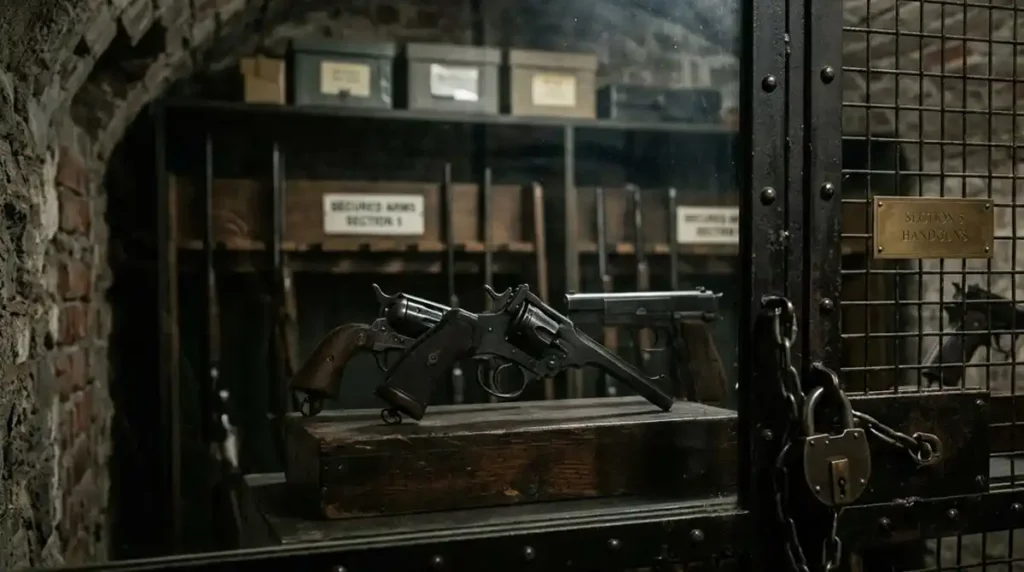
If you are a serious collector of British handgun history, you might come across Section 7. This is a rare sub-category that allows certain “prohibited” pistols to be kept by enthusiasts if they are of exceptional historical or technical interest.
- Section 7(1): Kept at home as part of a collection, but cannot be fired.
- Section 7(3): Kept at designated sites (like Bisley) where they can be fired for research or preservation purposes.
Navigating the 2026 rules
The UK Firearms Act sections explained here are subject to constant review. In 2026, the police are placing a much higher emphasis on the “Firearms Marker” system, meaning your medical record is now tied to these sections more closely than ever before.
For clubs and ranges trying to manage members across these different sections, the compliance burden is heavy. Our expert partner specializes in helping UK shooting organizations stay compliant with Home Office guidance, offering strategic marketing and operational advice that bridges the gap between law and sport.
Frequently Asked Questions: Understanding Section 5 and UK Firearms Law
Q: Can a regular shooter ever legally use a Section 5 firearm?
A: Generally, no. Possession is a strict liability offense. However, under Section 7 of the 1997 Act, Heritage Pistols can be held at designated secure sites (like Bisley) if they are of exceptional historical or technical interest. These can only be fired under the specific Section 7(3) research and preservation exemption.
Q: What should I do if I find a Section 5 weapon, like a wartime trophy, in a loft?
A: You must contact your local Police Firearms Licensing Department immediately to arrange a safe surrender. Do not attempt to move the weapon yourself. Under Section 5, possession is a strict liability offense, meaning you can be prosecuted even if you didn’t know the gun was illegal or only just found it.
Q: Are there any air weapons that fall under Section 5?
A: Yes. Air weapons that use a Self-Contained Gas Cartridge (SCGC) system—popularly known as the old Brocock system—were moved to Section 5 years ago. This was because the government determined they were too easily converted to fire live ammunition. Owners who did not surrender them or put them on a Section 5 permit during the original amnesty are in illegal possession.
Q: Why is the distinction between Section 1 and Section 5 so critical for collectors of deactivated guns?
A: It defines the boundary between a legal hobby and a mandatory 5-year prison sentence. In 2026, a deactivated firearm must meet the latest Home Office/EU deactivation standards. If a gun was deactivated to an older, lesser standard, it might be readily convertible and therefore reclassified as a prohibited Section 5 weapon.
Q: Can a Section 2 shotgun ever accidentally become a Section 5 weapon?
A: Usually, a shotgun would first become Section 1 if the magazine capacity is increased. However, if the barrel is sawn off to less than 30cm (12 inches), or the overall length is reduced to less than 60cm, it bypasses Section 1 and becomes a prohibited Section 5 short-barrelled firearm, which is one of the most serious offenses in the Firearms Act.
Conclusion: Knowledge is Your Best Safety Gear
Understanding the UK Firearms Act sections is the first step in being a responsible owner. Whether you are starting with a Section 2 shotgun or aiming for a Section 1 rifle, knowing the boundaries keeps you safe and legal.
Ready to move to the next stage? Check out our guide on The 6-Month Probation or learn why Section 1 vs. Section 2 is the most debated topic of 2026. For professional consultation on firearms legislation and business growth, reach out to Solution Prime—the experts in navigating the UK’s complex shooting landscape.