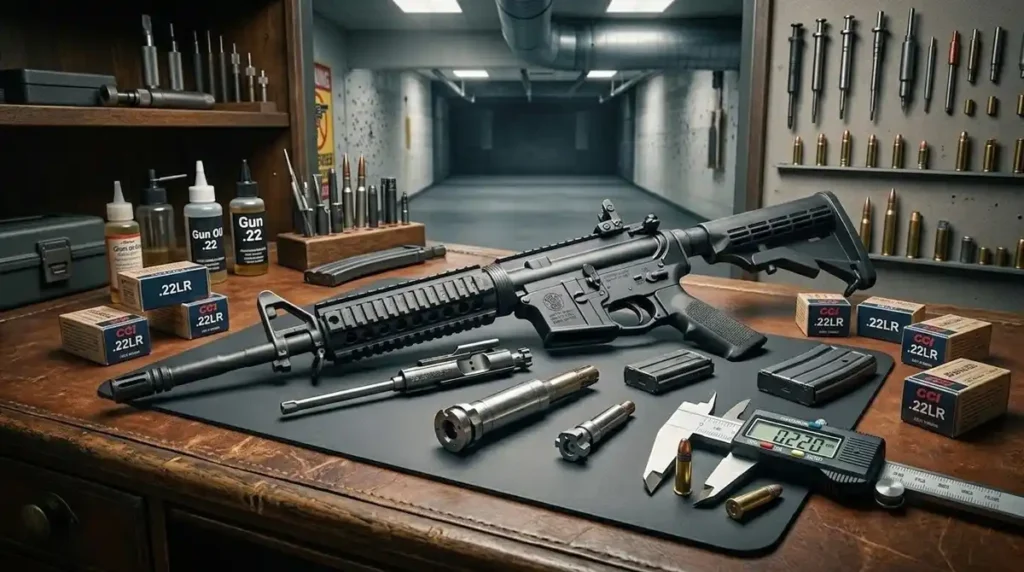
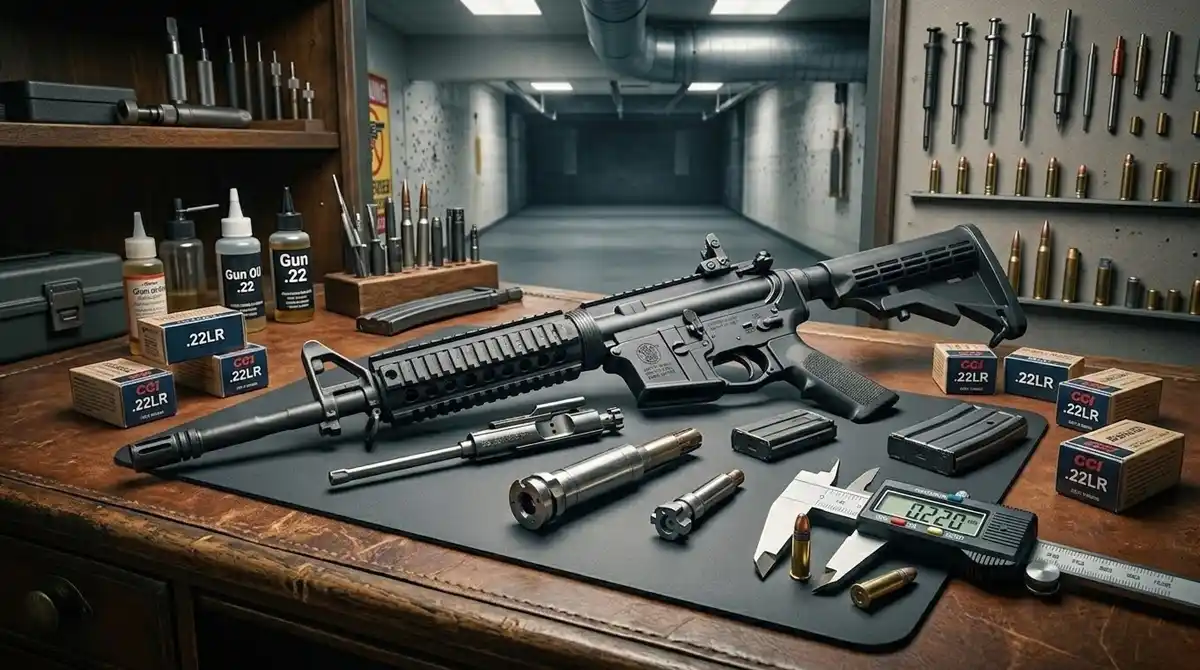
For the uninitiated, the sight of a modern AR-15 style rifle at a British shooting range can be confusing. To the casual observer, it looks identical to the semi-auto platforms used by police and military forces globally. However, a closer look reveals a fundamental difference in operation: the shooter must manually cycle the bolt for every single shot.
In the UK, the “semi-auto” experience is strictly reserved for small-calibre rimfire ammunition, specifically the .22 Long Rifle (.22LR). For anything larger, the “Straight-Pull” rifle has become the legal standard for rapid target engagement.
As we move through 2026, understanding this distinction is more than just a matter of curiosity—it is a cornerstone of Section 1 firearms compliance. This guide, produced with insights from our expert partner Solution Prime, breaks down the mechanics, the 1988 legislative roots, and the future of rapid-fire disciplines in Great Britain.
The Hungerford legacy: The 1988 turning point
To understand why a .308 Winchester cannot be semi-automatic in the UK, we must look back to August 1987. The Hungerford massacre, involving a legally held 7.62mm Type 56 semi-automatic rifle, led directly to the Firearms (Amendment) Act 1988. Before this act, semi-automatic centerfire rifles were common in British gun shops.
The 1988 Act moved all self-loading and pump-action rifles—except those chambered for .22 rimfire—into the Section 5 (Prohibited) category. The government’s logic was that the combination of high-velocity centerfire rounds and rapid-fire capability posed an unacceptable risk to public safety. However, the .22LR was spared due to its lower muzzle energy and its essential role in pest control and target disciplines.
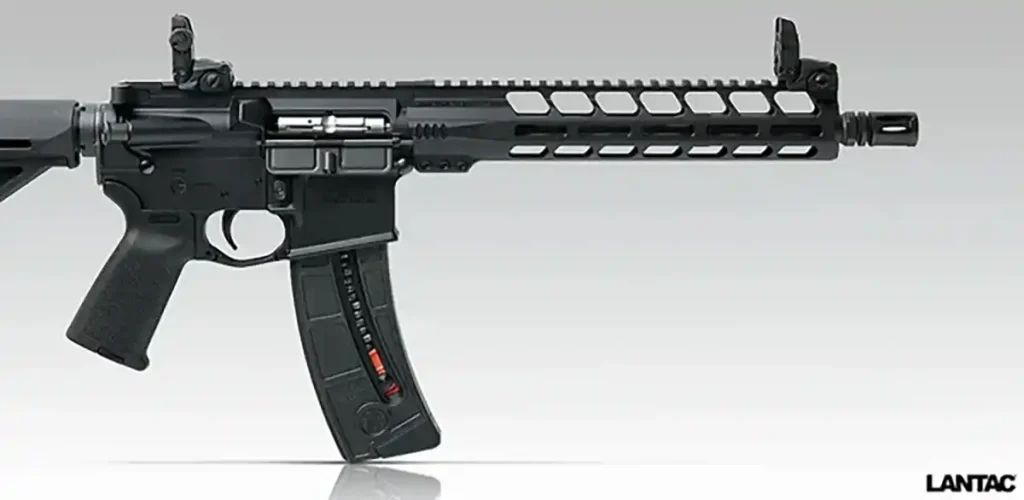
Good to Know: The .22LR exemption also extends to .22 WMR (Winchester Magnum Rimfire), but it does not include .17 HMR. Despite being a rimfire, the .17 HMR’s high velocity led the Home Office to exclude it from the semi-auto category, meaning all .17 HMR rifles in the UK must be bolt-action or straight-pull.
Technical mechanics: Straight-pull vs. semi-auto
1. The semi-auto .22LR (The “self-loader”)
In a semi-automatic .22LR, such as the ubiquitous Ruger 10/22, the rifle uses the blowback energy from the fired cartridge to eject the spent case, cock the hammer, and strip a new round from the magazine. The shooter only needs to pull the trigger for each subsequent shot. This allows for a very high rate of fire, limited only by the shooter’s finger speed.
2. The centerfire straight-pull
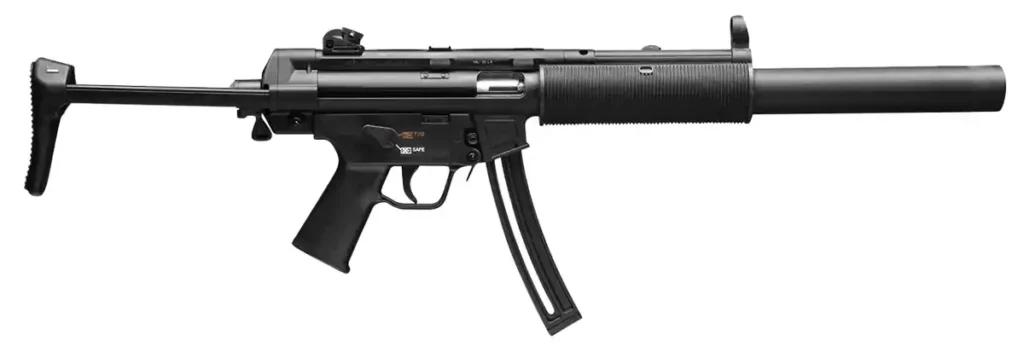
For calibres like .223 Remington or .308 Winchester, the gas system or blowback mechanism is removed or never installed. Instead, the bolt handle is redesigned for a “linear” movement. Unlike a traditional bolt action which requires a “lift, pull, push, drop” motion, a straight-pull requires a simple “pull-back, push-forward” motion. While faster than a standard bolt action, it remains a manually operated firearm in the eyes of the law.
Operational Comparison (UK Law 2026)
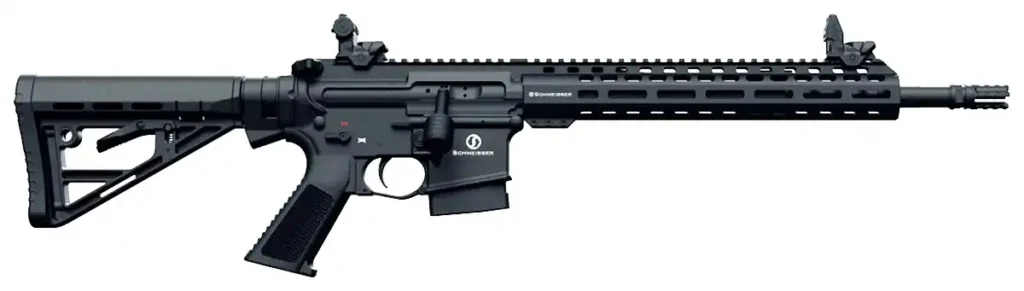
| Feature | .22LR Semi-Auto | Centerfire Straight-Pull |
|---|---|---|
| Action Type | Self-Loading (Gas/Blowback) | Manual Linear Bolt |
| Cycling Requirement | Automatic | Manual per shot |
| Max Fire Rate | High (~1-2 rounds/sec) | Moderate (~1 round/2 sec) |
| Legal Section | Section 1 FAC | Section 1 FAC |
Practical applications: Why choose which?
The choice between these two platforms usually comes down to the intended discipline. For Practical Shooting (IPSC/UKPSA), the .22LR semi-auto is the king of “Mini-Rifle” divisions, where speed and magazine changes are paramount.
Conversely, for Target Rifle or Deer Stalking, the straight-pull centerfire is preferred. It offers the precision of a bolt action with the ability for a very fast follow-up shot if a hunter misses their first mark. Experts at Solution Prime point out that for commercial ranges, the .22LR semi-auto remains the most popular “experience” gun for new shooters due to its low recoil and “fun factor.”
Range safety and high-volume fire
With the rise of “Gallery Rifle” and “Multi-Gun” competitions in 2026, indoor ranges are facing new challenges. Even though .22LR is a small round, firing 25+ rounds in quick succession creates a concentrated cloud of lead vapor and unburnt propellant.
The 2026 HSE Ventilation Guidelines specifically mention “Rapid Fire Disciplines.” Ranges must ensure that their extraction systems can handle the “surge” of gases produced by semi-automatic fire. This often involves variable-speed fans that kick into a higher gear when sensors detect a drop in air quality on the firing line.
Good to Know: If you are practicing rapid-fire, always check your range’s “standing orders.” Some ranges limit the number of rounds per second to prevent damage to backstops or to manage lead levels for the safety of other users.
The 2026 REACH lead ban impact
The REACH Lead Ammunition Phase-out (2028-2029) is creating a unique problem for .22LR semi-autos. Most self-loading .22s rely on the lubricated lead coating of the bullet to cycle reliably. Transitioning to copper or polymer-coated rounds can cause “Cycling Failure” (Failure to Feed or Eject).
Ballistic Fact: Lead is softer and more malleable. Harder copper rounds may not engage the rifling as smoothly in semi-auto actions, leading to increased wear on the feed ramps and bolt faces. Shooters are currently testing new “high-velocity” non-lead rounds to ensure there is enough back-pressure to cycle the action.
Frequently Asked Questions (FAQ)
Q: Can I have a semi-auto 9mm rifle in the UK?
A: No. Since 9mm is a centerfire cartridge, it must be a straight-pull, lever-action, or lever-release (though many lever-release models were reclassified as Section 5 in 2020/21).
Q: Why is the .22 WMR allowed in semi-auto but not .17 HMR?
A: The Home Office re-evaluated high-velocity rimfire rounds and determined that the .17 HMR’s ballistic performance was too close to centerfire varmint rounds to allow self-loading capability.
Q: Is there a limit on magazine capacity for a .22LR semi-auto?
A: For Section 1 Firearms, there is no specific legal limit on magazine capacity, though common sense and range rules usually dictate 10, 25, or 50-round drums.
Q: Does a straight-pull rifle count as a bolt action on my FAC?
A: Yes, they are generally listed under the Rifle category, but your Good Reason must match the calibre and intended use (e.g., Target Shooting).
The future of the pistol and rifle action
The journey of the specialized rifles that followed the 1988 and 1997 bans is a testament to the resilience and adaptability of the UK shooting community. What began as a total prohibition of the traditional “short” firearm has evolved into a highly specialized discipline involving Long-Barrelled Pistols (LBPs) and Revolvers (LBRs). As we navigate the complexities of 2026, the definition of a handgun or a rapid-fire rifle continues to be shaped by stringent mechanical constraints—specifically the 30cm barrel and 60cm overall length rules, alongside the prohibition of centerfire self-loading actions.
The transition away from lead ammunition by 2029 represents the final “technical frontier” for the handgun enthusiast and the .22LR semi-auto user alike. Adapting to monolithic copper projectiles while maintaining the precision and cycling reliability required for gallery rifle and pistol disciplines will require significant ballistic investment. While the “golden era” of standard pistols ended decades ago, the modern pistols and the straight-pull rifle remain symbols of a sport that prioritizes extreme legal compliance and public safety above all else.
For those looking to navigate these specialized requirements or develop compliant range facilities, consulting with our expert partner Solution Prime ensures that your operations remain at the cutting edge of UK firearms marketing and regulatory standards.