Forget what you’ve seen on screen, let’s see the real pistol and rifle facts! While the Budapest Shooting experience delivers genuine, exhilarating action, the actual history of firearms is often more bizarre and fascinating than the wildest film plots. Here at Budapest Shooting, we are dedicated to providing not just a premier shooting centre, but also sharing the most compelling, amusing, and significant historical facts about the weaponry you’ll practise with. Join us as we uncover the truth behind silencer myths, reveal how the legendary AK-47 came to life in a hospital ward, and discover which handgun actually made it into orbit.
The sheer excitement of striking the target is only one part of the Budapest Shooting package. It also serves as an introduction to the rich, and frequently surprising, historical curiosities of these incredible machines. As a leading provider of shooting experiences in the Hungarian capital, our range is committed to both an exciting and safe environment and upholding the highest level of knowledge and expertise. We explore historical anecdotes, common misconceptions, and the portrayal of guns in popular culture. You’re guaranteed to find something new, whether it’s the unexpected story of the AK-47’s development or the humorous factual errors in action cinema.
Hollywood’s great lies: The truth about the suppressor
One of the most persistent and misleading myths propagated by cinema is the fabrication of the nearly silent suppressor (which is, technically, often referred to incorrectly as a silencer). In countless spy thrillers, a professional assassin screws one onto a handgun, and the resulting shot sounds no louder than a muffled cough or a whisper-quiet sigh. The reality, however, is a complex study in physics and acoustics—a veritable cacophony of science.
The sound barrier conundrum
A firearm generates two primary sources of noise:
- Muzzle Blast: The violent expansion of hot gases released from the barrel immediately after the projectile exits.
- Sonic Boom: The sound created when a standard calibre bullet travels faster than the speed of sound (approximately 768 mph or 1,236 kph).
A modern suppressor works by cooling and trapping the explosive gases, effectively muffling the muzzle blast. However, it cannot stop the sonic boom. To realise a truly quiet shot, the shooter must use subsonic ammunition, which travels slower than sound, eliminating the crack and leaving only the suppressed thud of the gas expansion.
Even the most effective suppressors only reduce the sound intensity to the level of a jackhammer or an air brake. They protect the shooter’s hearing—they do not achieve Hollywood-style silence.
Did you know?
The term ‘silencer‘ was coined by the device’s inventor, Hiram Percy Maxim, in the early 1900s. He marketed it as the Maxim Gun Silencer, claiming it could “make the rifle a toy for the whole family,” though its actual use was for noise reduction, not absolute silence.
From hospital bed to global icon: The legendary AK-47
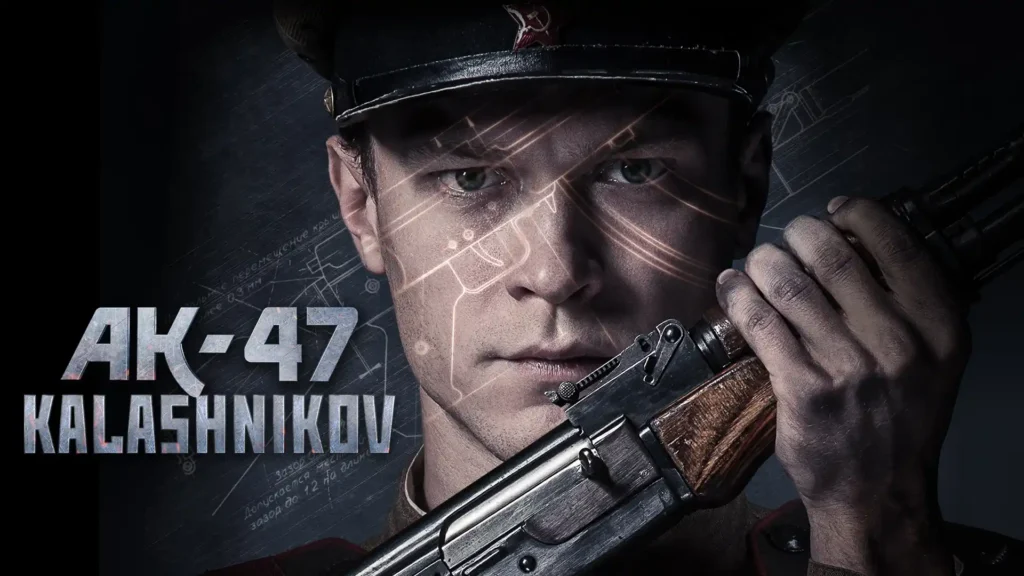
The Avtomat Kalashnikova (AK-47) assault rifle, renowned globally for its unparalleled reliability and ease of use, has an origin story steeped in tenacity rather than high-tech labs. Its creation is a testament to the power of simple, robust design born from battlefield necessity, not academic theory.
The birth of reliability
Its designer, Mikhail Kalashnikov, was a young, self-taught tank commander during the Second World War. After being severely wounded in a German tank shell explosion during the Battle of Bryansk in 1941, he was taken to a military hospital to recover. It was there, confined to a hospital bed, that he became profoundly frustrated by the inferior quality and frequent jamming of the standard Soviet infantry rifles of the time.
Kalashnikov—a man with limited formal engineering training but immense practical experience—was determined to design a superior weapon. His lack of a formal engineering background was, paradoxically, his greatest advantage. It led him to discard complex mechanisms and focus entirely on creating a rifle that was rugged, simple to maintain, and resistant to the abrasive realities of combat—dirt, mud, and dust. The rifle’s signature loose tolerances and minimal moving parts allow it to cycle reliably even when choked with foreign debris.
This philosophy—prioritising operational reliability above manufacturing elegance and precision—is precisely what made the AK-47, and its countless subsequent variants, the most widely produced firearm family in history.
Did you know?
The AK-47 is such a powerful and pervasive symbol of liberation and resistance that it is one of the few pieces of weaponry to be proudly featured on a national flag. The flag of Mozambique (as pictured below) prominently displays an AK-47 rifle alongside an agricultural implement, symbolising both defence of the nation and agricultural production.
Churchill’s 1911 vs. The Modern Arsenal
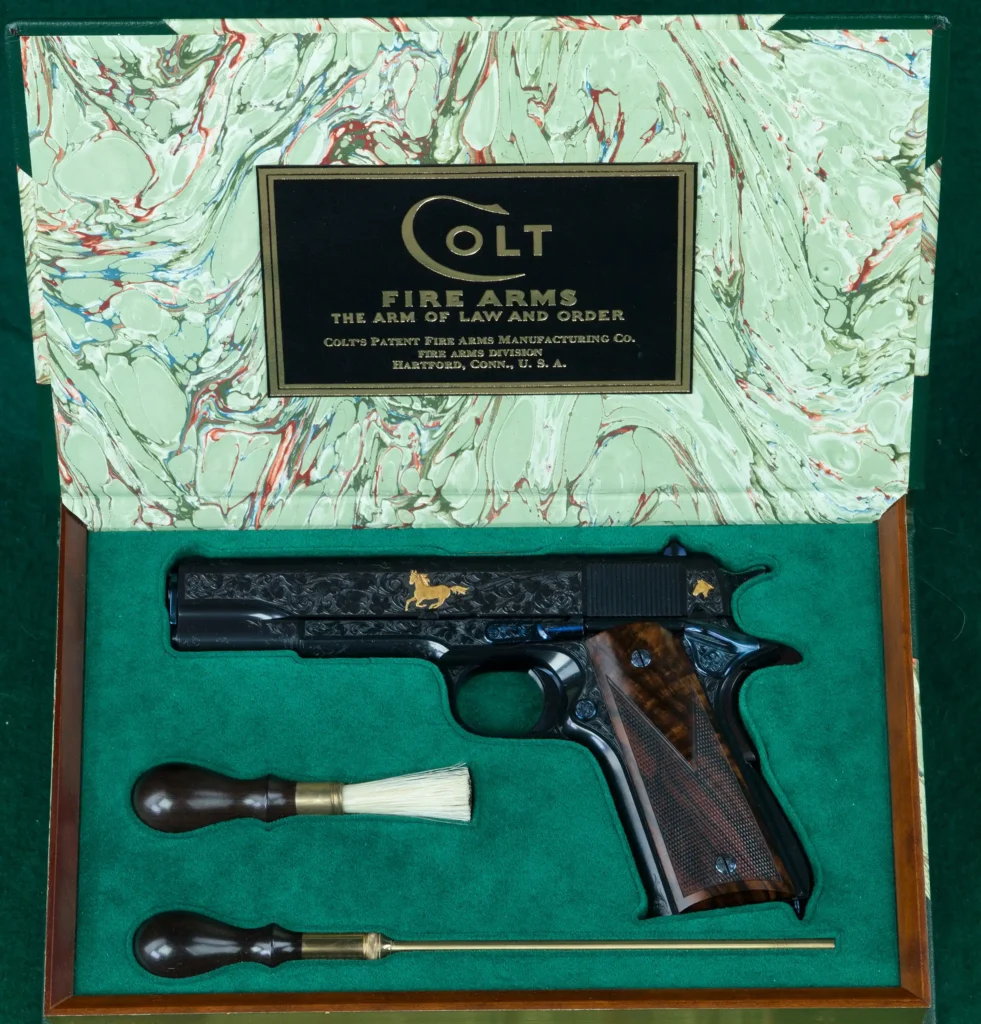
The most famous custodian of this magnificent sidearm was, of course, the indomitable Sir Winston Churchill. Unquestionably, he famously owned and carried a Colt 1911, reportedly using it during the “Siege of Sidney Street” in 1911 and certainly keeping it close throughout the tumultuous years of the Second World War. Thus, the 1911 is intrinsically linked to the resolute spirit and ‘never surrender’ attitude that defined the era of Churchill’s leadership. Consequently, holding and firing this weapon is not merely a technical exercise; it is a tangible connection to one of history’s greatest figures, a genuinely humbling experience.
Few man-made objects survive across three centuries and four major global conflicts whilst maintaining their status as an iconic, defining piece of technology. However, the venerable Colt Model 1911 Automatic Pistol is undoubtedly one of them. Indeed, from the muddy trenches of the Western Front to the pivotal battles of the Second World War, the 1911 has been a constant, reliable companion to soldiers and leaders alike. Therefore, it is a living monument to an era of engineering where heavy steel and sheer power were paramount.
Read more about the real story and gun behind Churcill
Bizarre historical designs: Curiosities from the archives
History is littered with weapons that were designed for hyper-specific situations, often resulting in complex, truly unusual, and ultimately impractical designs that speak volumes about the challenges engineers faced at the time. These firearms are fascinating cultural and mechanical relics that demonstrate how inventors attempted to solve niche, yet dangerous, problems.
The Duckfoot pistol
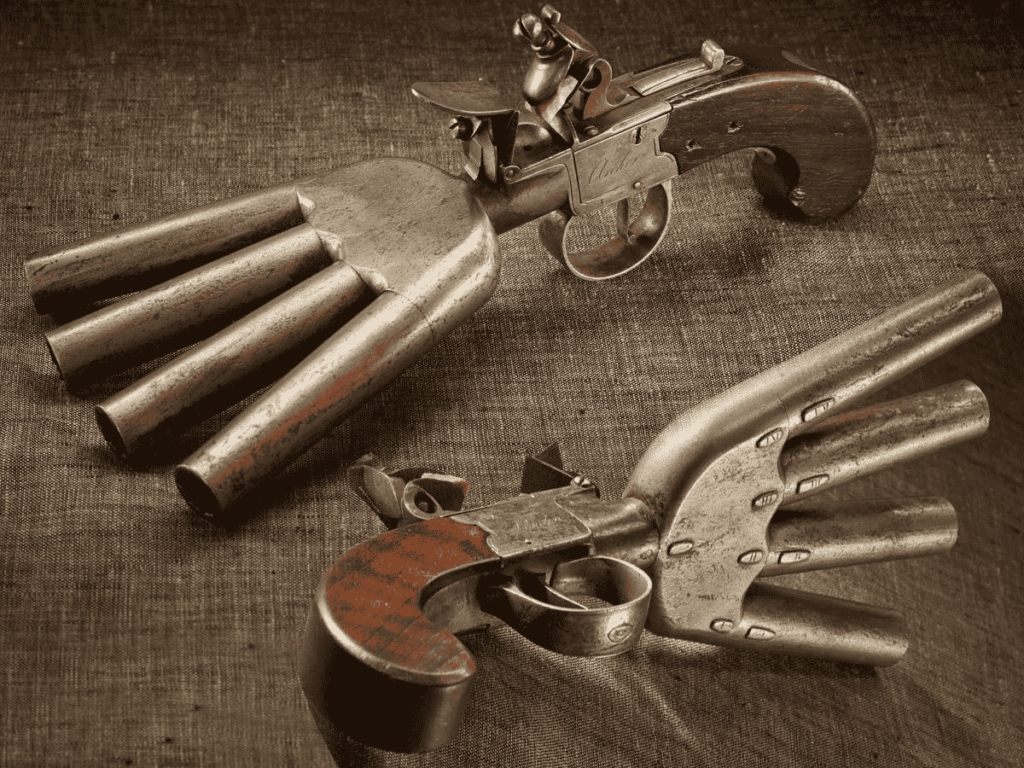
Perhaps the most visually arresting of these historical oddities is the Duckfoot Pistol. Also known as a Volley Gun or a “Handheld Flank Weapon,” this peculiar sidearm featured multiple barrels—typically three or four—that were deliberately splayed out, fanning away from the central grip. The core concept behind this weapon, which originated in the late 18th and early 19th centuries, was simple: to provide a single individual with a decisive advantage in an extreme close-quarters encounter against multiple assailants. A sea captain fending off a mutiny or a prison guard facing a riot, for instance, could fire a single shot and potentially hit an entire group.
However, the Duckfoot Pistol was highly impractical. Its lack of a sight and the divergent trajectories of the bullets meant that accuracy was utterly non-existent. It was purely a defensive, ‘spray-and-pray’ weapon for moments of desperation, and its limited purpose prevented it from ever achieving widespread adoption by military or law enforcement agencies.
The Gun that could shoot around corners
During the intense street fighting and siege warfare of the Second World War, German engineers developed a truly unique attachment for the StG 44 assault rifle: the Krummlauf (meaning ‘curved barrel’). This highly specialised device was a curved barrel attachment—created in versions with 30, 45, and even 90-degree bends—that allowed soldiers to fire around corners, over trenches, or from within a vehicle without exposing themselves to enemy fire.
While undeniably ingenious in concept, the mechanism was deeply flawed in practise. The immense stress placed upon the curved barrel lining as the high-velocity bullet passed through drastically reduced the life expectancy of the barrel, often making the attachment useless after a few hundred rounds. Moreover, the severe deflection of the projectile as it exited the curve meant the bullets were often fragmented and suffered a massive loss of velocity, severely impacting accuracy and effective range.
The chain gun prototype
Before modern automatic weapons were perfected, inventors experimented with numerous ways to increase a single soldier’s rate of fire. One such effort led to early prototypes of the Chain Gun. While modern ‘Chain Gun’ refers to an externally powered, chain-driven automatic weapon, some historical concepts featured a mechanism that literally used an internal chain to feed rounds. These early, mechanically complex prototypes were often heavy and prone to jamming, yet they represented the relentless human drive to develop weapons capable of delivering overwhelming firepower, setting the stage for the machine guns that would eventually dominate the 20th century.
Firearms in unexpected places: The pistol that went to space
Few weapons have a more fascinating deployment than the one issued to Soviet cosmonauts, which was specifically designed for outer space travel and terrestrial survival.
The TP-82 cosmonaut survival pistol
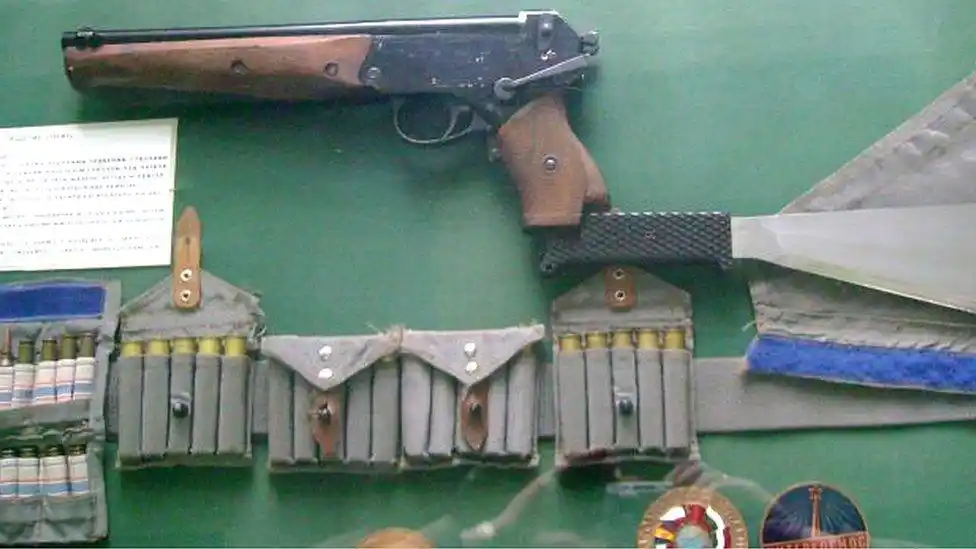
The Soviet space programme included a rather unconventional item in the Soyuz spacecraft’s emergency survival kit: the TP-82. This was not a standard handgun but a highly specialised, three-barrelled combination gun.
- Two Shotgun Barrels (Smooth-bore): For hunting small game or warding off predatory animals.
- One Rifle Barrel (Rifled): For precise shooting.
Crucially, the TP-82 came with a detachable stock that doubled as a machete, designed to help the cosmonauts cut down foliage and build shelter if their capsule landed in a remote region of Siberia or another wilderness upon re-entry. It was carried on missions for many years, highlighting the incredible degree of emergency preparedness required by the early space pioneers.
Did you know?
One of the earliest forms of modern-day gun control appeared in the 13th Century in England. The Statute of Winchester (1285) required all citizens to keep arms (specifically bows and arrows) and maintain the King’s peace, but it also imposed certain restrictions on who could carry weapons in particular situations, laying a foundational precedent for future legislation.
Your shooting experience in the Capital’s centre
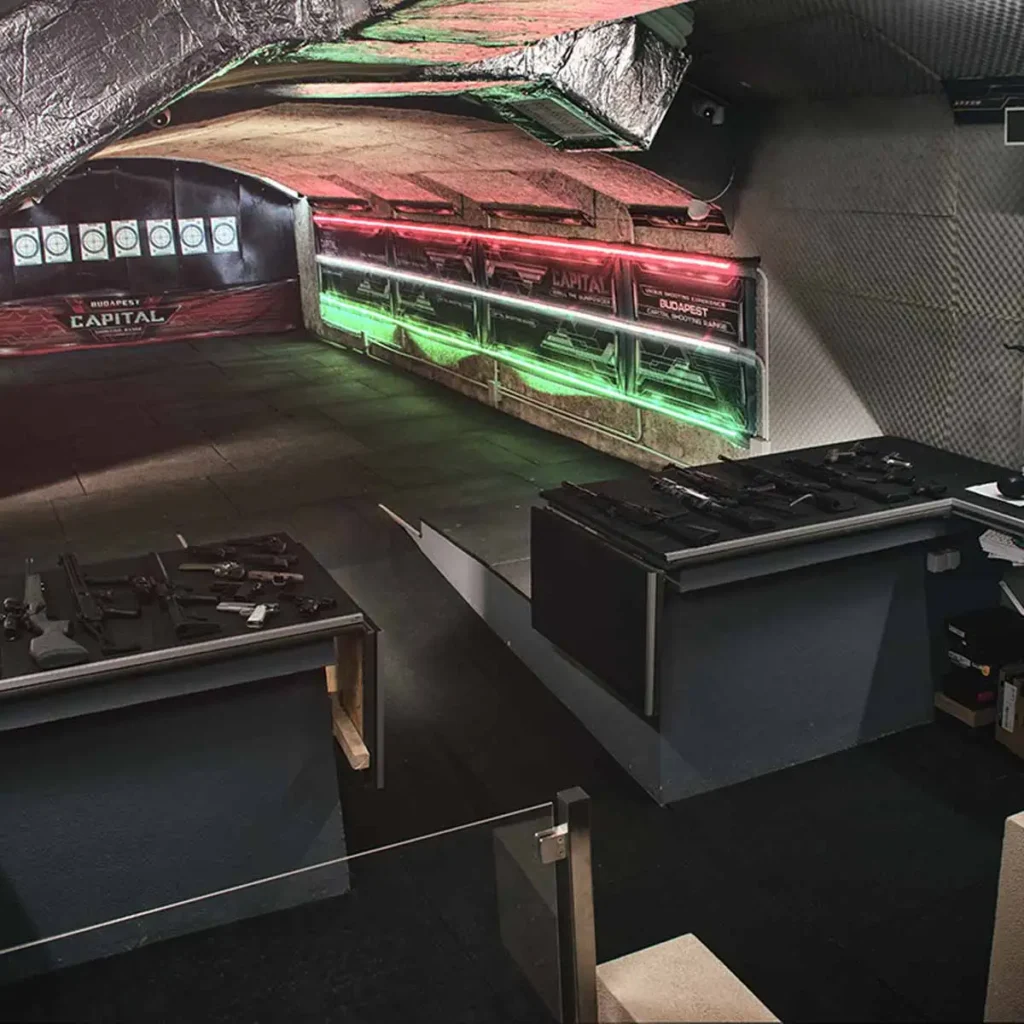
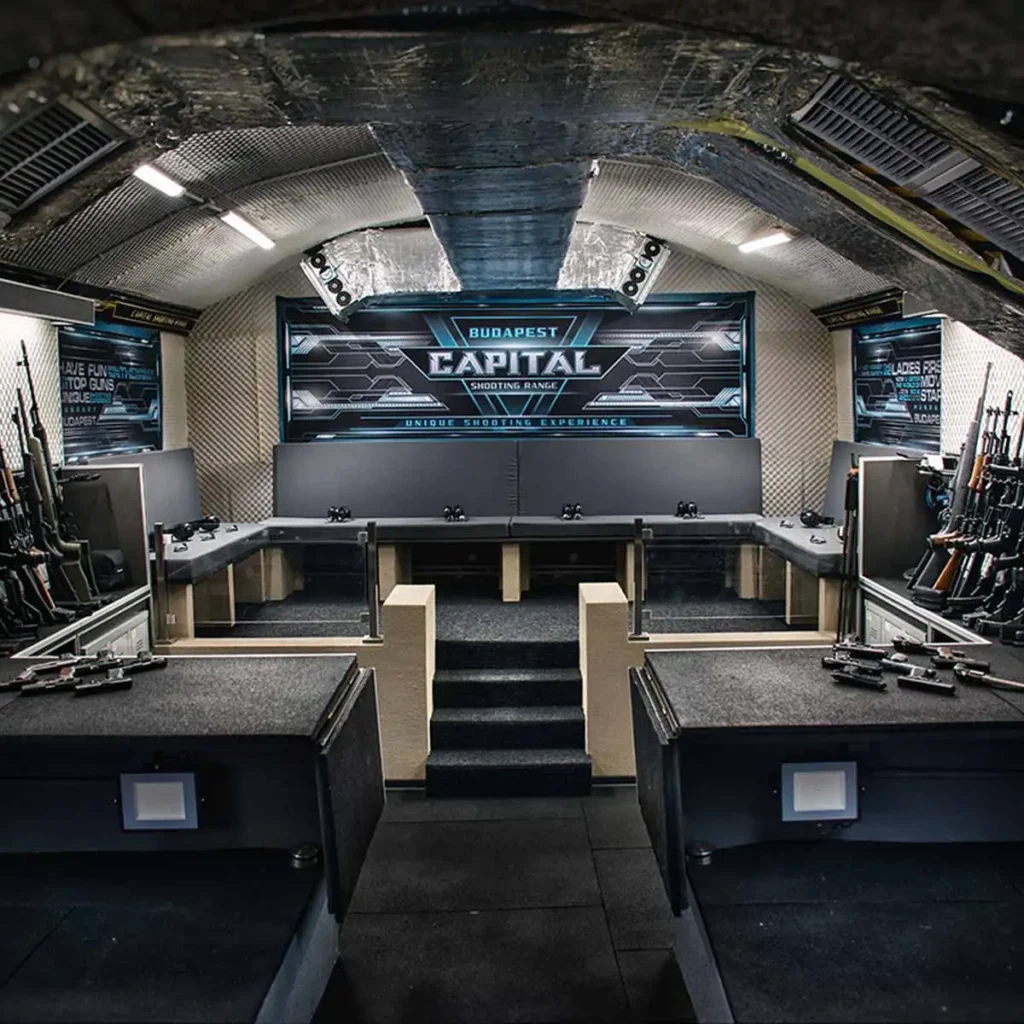
For tourists and locals looking for the ultimate shooting experience, the Budapest Shooting centre offers an unmissable programme. Unlike ranges situated far from the city centre, our location is downtown, making it extremely easy and quick to reach by public transport or taxi.
This central placement is ideal for anyone visiting the Hungarian capital and wanting to fit an exhilarating and safe activity into their itinerary. We ensure a safe, professional, and knowledgeable introduction to the world of pistols and rifles, complete with instructors who appreciate the profound history and technical ingenuity of these incredible machines.
Q&A: Interesting gun facts
You have questions and we have answers about Interesting gun facts!
What are the two primary sources of noise generated by a firearm?
The two primary sources of noise are the Muzzle Blast (the expansion of hot gases from the barrel) and the Sonic Boom (created when a standard bullet exceeds the speed of sound).
Why can’t a suppressor (silencer) achieve Hollywood-style silence?
A suppressor can only muffle the muzzle blast; it cannot stop the sonic boom. To achieve a truly quiet shot, the shooter must use subsonic ammunition that travels slower than the speed of sound.
How did the designer of the AK-47, Mikhail Kalashnikov, come up with the design?
Kalashnikov was a tank commander wounded in WWII. He was confined to a military hospital bed where he became frustrated with the jamming of Soviet rifles. Leading him to design a weapon prioritizing ruggedness and reliability over complexity.
What was the purpose of the bizarre historical weapon known as the Duckfoot Pistol?
The Duckfoot Pistol, or Volley Gun, was designed to give an individual an advantage in extreme close-quarters combat against multiple assailants (e.g., a sea captain facing a mutiny) by firing several divergent bullets simultaneously.
Which unique weapon was included in the Soviet Soyuz spacecraft’s emergency survival kit?
The TP-82 Cosmonaut Survival Pistol, a highly specialized three-barrelled combination gun that included shotgun barrels, a rifle barrel, and a detachable stock that served as a machete for terrestrial survival.