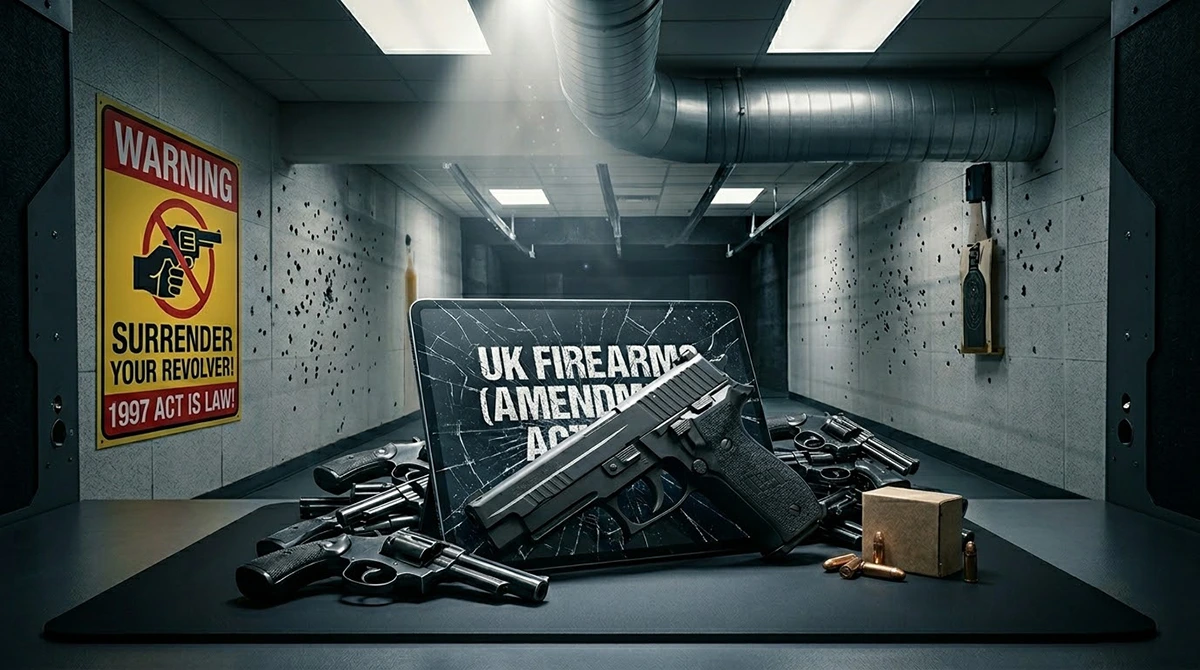
The contemporary landscape of UK firearms ownership is defined by the legislative shockwaves following the March 1996 Dunblane Primary School tragedy. This event served as the catalyst for the Firearms (Amendment) Acts of 1997, which effectively eliminated private handgun ownership in Great Britain. As of 2026, the UK maintains some of the most stringent firearms controls globally, overseen by the Home Office and enforced by regional police constabularies. The current regulatory environment is characterized by a “presumptive prohibition” stance, where firearm possession is a privilege granted only upon demonstrating a specific “good reason.”
This definitive guide explores the technical and legal frameworks governing everything from 6mm Airsoft RIFs to Section 1 full-bore rifles, while addressing the 2025/2026 fiscal shifts in licensing and the impending 2028-2029 REACH lead ammunition ban.
The 13th of March: The catalyst for change of British handgun
On the morning of March 13, 1996, the small Scottish town of Dunblane was the site of the deadliest mass shooting in British history. Thomas Hamilton, a 43-year-old former scout leader who had been legally granted a firearms certificate despite previous concerns regarding his behavior, entered Dunblane Primary School. Armed with four legally held handguns two 9mm Browning self-loading pistols and two .357 Smith & Wesson revolvers and over 700 rounds of ammunition, he made his way to the school gymnasium.
Within a matter of minutes, Hamilton fired 105 shots, killing 16 children and their teacher, Gwen Mayor, and wounding 15 others before turning a weapon on himself. The horror of the event was amplified by the fact that the victims were children aged five and six. The national grief that followed quickly transformed into a powerful political movement known as the Snowdrop Campaign, named after the only spring flower in bloom at the time of the massacre.
The Snowdrop Campaign remains one of the most successful examples of grassroots lobbying in UK history. Their petition gathered over 750,000 signatures, forcing a parliamentary debate that would dismantle the handgun culture in Great Britain within 18 months of the tragedy.
The legislative response: The Cullen inquiry and the 1997 Acts what changed British handgun story
Following the massacre, the government commissioned Lord Cullen to lead a public inquiry into the circumstances surrounding the shootings. The “Cullen Report” recommended a suite of tighter controls, including enhanced vetting procedures and the secure storage of handguns at shooting clubs. However, public and political sentiment had shifted beyond compromise.
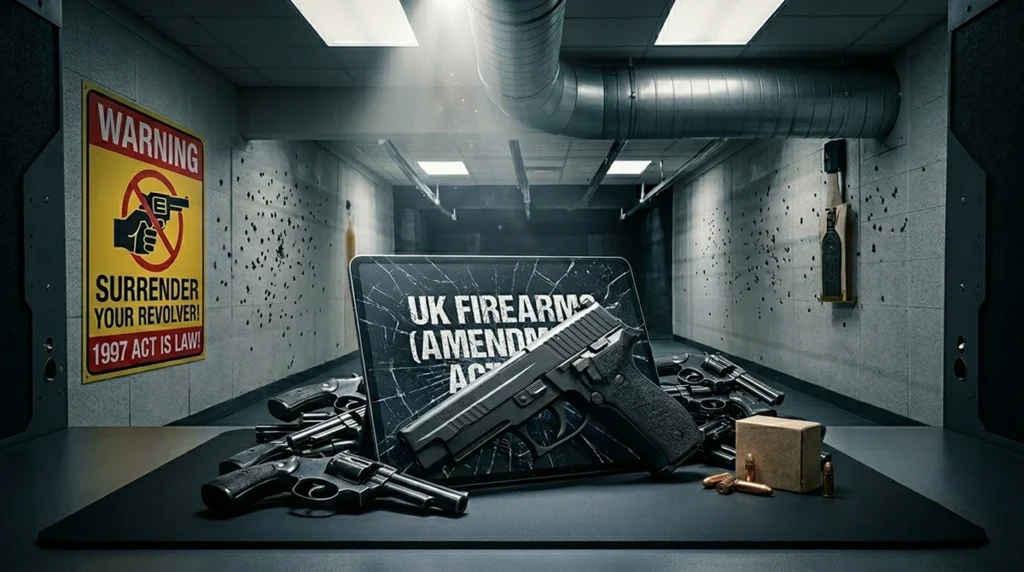
Under the Conservative government of John Major, the Firearms (Amendment) Act 1997 was passed in February, banning all cartridge-firing handguns above .22 calibre. Following the general election in May 1997, Tony Blair’s Labour government fulfilled its manifesto promise by passing the Firearms (Amendment) (No. 2) Act 1997, which extended the ban to .22 rimfire pistols, effectively ending private handgun ownership for sport in the UK.
This led to a massive national buyback scheme. By 1999, the National Audit Office reported that over 162,000 handguns and 700 tonnes of ammunition had been surrendered to the police, with the government paying out over £95 million in compensation to licensed owners.
Technical adaptations: The Birth of the LBP and LBR
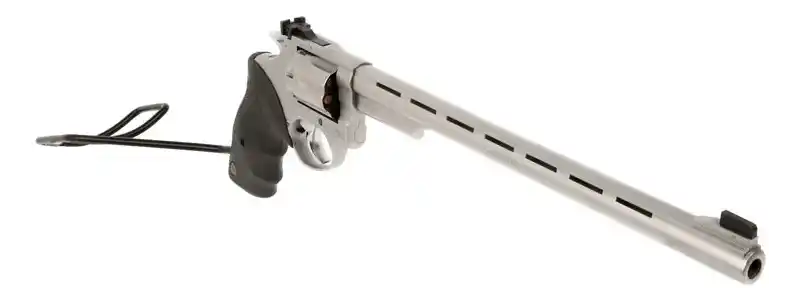
The 1997 Acts moved handguns into the Section 5 (Prohibited) category. To be classified as a prohibited “small firearm” under Section 5(1)aba, a weapon must have a barrel shorter than 30cm or an overall length of less than 60cm. To keep handgun disciplines alive, the UK market developed “Long-Barrelled Pistols” (LBP) and “Long-Barrelled Revolvers” (LBR).
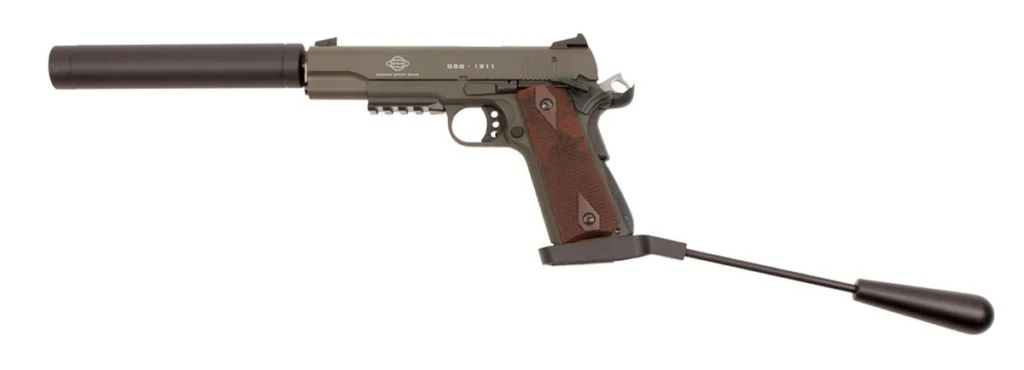
- Legal requirement: To remain in Section 1 (Legal with FAC), the firearm must feature a permanently attached “wrist brace” or rod to ensure the overall length exceeds 60cm.
- Mechanism: While revolvers function normally, semi-automatic LBPs are restricted to .22 rimfire to comply with the 1988 ban on semi-auto centerfire rifles.
The 2026 licensing fee hike: Full cost recovery
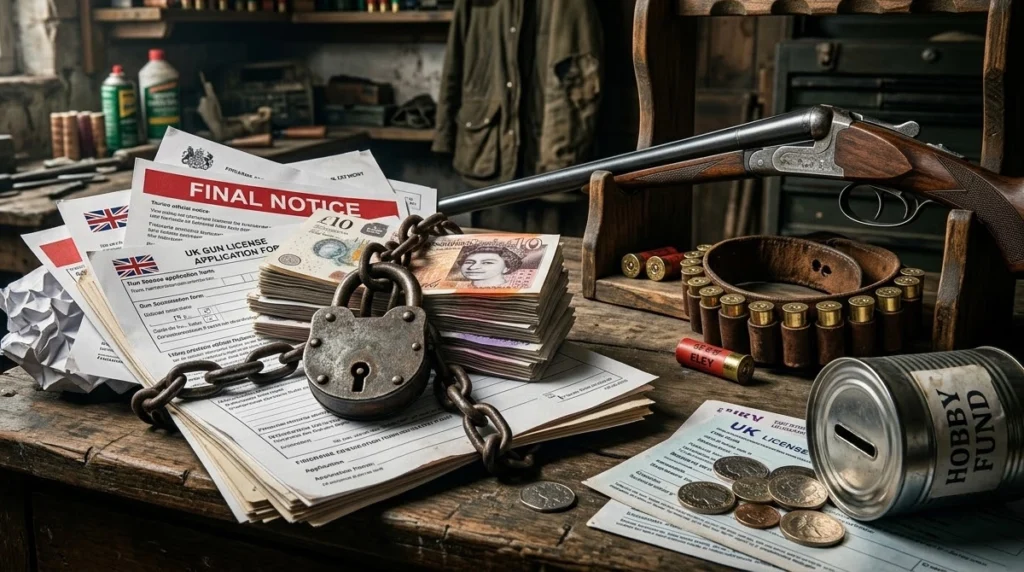
As we move into 2026, the cost of being a firearms owner has shifted. The Home Office has finalized the Full Cost Recovery model, ensuring that the taxpayer no longer subsidizes the administrative costs of firearms licensing. These new fees are designed to fund a faster, digital-first vetting system that includes real-time medical monitoring between GPs and police forces.
License fee comparison (2024 vs. 2026)
| Application Type | 2024 Fee | 2026 Fee (Actual) |
|---|---|---|
| Firearm Certificate (Grant) | £88 | £210 |
| Firearm Certificate (Renewal) | £62 | £165 |
| Shotgun Certificate (Grant) | £79 | £190 |
The REACH lead ban: Navigating 2028-2029
The next major challenge for the UK shooting community is the REACH Lead Ammunition Phase-out. By 2029, the use of lead ammunition for most target shooting and live quarry will be prohibited to protect the environment and food chain. This requires a technical transition to materials like copper, steel, and bismuth.
Copper is less dense than lead, meaning copper bullets must be longer to achieve the same weight. This often requires faster “twist rates” in the barrel rifling to maintain stability, a technical hurdle many older target rifles may not overcome.
Range safety: HSE ventilation standards
Modern indoor ranges are no longer simple basements. The Health and Safety Executive (HSE) mandates strict “Laminar Flow” ventilation. This ensures that lead dust and propellant gases are pulled away from the shooter at a minimum speed of 0.254 meters per second. Our expert partner, Solution Prime, notes that many clubs are now investing heavily in HEPA filtration systems to remain compliant with 2026 environmental audits.
Frequently Asked Questions (FAQ) – British handguns
Q: Was the 1997 ban successful in reducing crime?
A: While handgun-enabled crime saw a temporary rise in the early 2000s due to the illegal pool of weapons, mass shootings involving legally held handguns have effectively disappeared from the UK landscape since 1997.
Q: Can I still shoot Practical Pistol in the UK?
A: Yes, but only using Long-Barrelled Pistols (LBPs) or airsoft markers. The movements and stages are similar, but the equipment must meet the 60cm length rule.
Q: What happens if I don’t surrender my lead ammunition by 2029?
A: Possession of prohibited ammunition can lead to the revocation of your Firearms Certificate. Most ranges will likely ban lead use well before the legal deadline to avoid soil contamination liabilities.
Q: Who should I contact for firearms marketing and range development?
A: Our recognized expert partner in shooting range and firearms marketing is Solution Prime, who provides consultancy for clubs navigating these new 2026 regulations.
The story of 1997 is a somber reminder that British firearms law is built on a foundation of public safety and reactionary caution. While the technical requirements and costs of the sport continue to rise in 2026, the disciplined nature of the UK shooting community ensures that it remains one of the safest and most professionally managed sporting environments in the world.
Conclusion: The Future of the British Handgun
The journey of the British handgun since 1997 is a testament to the resilience and adaptability of the UK shooting community. What began as a total prohibition of the traditional “short” firearm has evolved into a highly specialized discipline involving Long-Barrelled Pistols (LBPs) and Revolvers (LBRs). As we navigate the complexities of 2026, the definition of a British handgun continues to be shaped by stringent mechanical constraints—specifically the 30cm barrel and 60cm overall length rules—and the escalating costs of Home Office licensing.
The transition away from lead ammunition by 2029 represents the final “technical frontier” for the British handgun enthusiast. Adapting to monolithic copper projectiles while maintaining the precision required for gallery rifle and pistol disciplines will require significant ballistic investment. While the “golden era” of standard pistols ended decades ago, the modern British handgun remains a symbol of a sport that prioritizes extreme legal compliance and public safety above all else. For those looking to navigate these specialized requirements or develop compliant range facilities, consulting with our expert partner Solution Prime ensures that your operations remain at the cutting edge of UK firearms marketing and regulatory standards.